
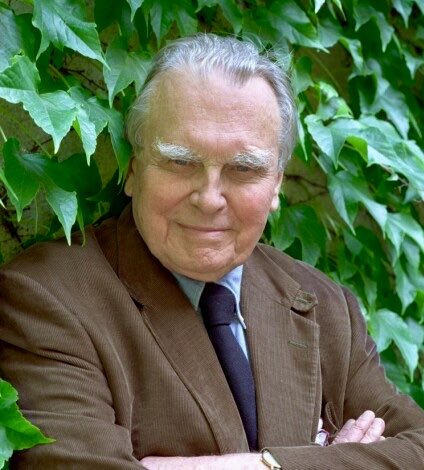
« La pilule [du conformisme] est toujours en vente. Seulement maintenant, elle est avalée pour le statut plutôt que par peur – et personne n’a besoin d’une police secrète, du moins officiellement. Le Ketman est partout : l’employé qui hoche la tête pendant la formation à la diversité, l’universitaire qui signe la lettre à laquelle il ne croit pas, le journaliste qui sait et n’écrit pas. Lisez Miłosz aujourd’hui et vous reconnaîtrez votre bureau. »
« La pilule [du conformisme] est toujours en vente. Seulement maintenant, elle est avalée pour le statut plutôt que par peur – et personne n’a besoin d’une police secrète, du moins officiellement. Le Ketman est partout : l’employé qui hoche la tête pendant la formation à la diversité, l’universitaire qui signe la lettre à laquelle il ne croit pas, le journaliste qui sait et n’écrit pas. Lisez Miłosz aujourd’hui et vous reconnaîtrez votre bureau. »Krzysztof Szczawinski 🇵🇱 (@Kristof_Poland)Czesław Miłosz – How Brilliant People Surrender to a Lie.
The most precise book ever written about how intelligent people surrender to a lie was written by a man who had served one himself – and then stopped.
Czesław Miłosz. Poet. Nobel Prize, 1980. After the war he served communist Poland as a diplomat in Washington and Paris. In 1951 he defected. Two years later he published The Captive Mind.
1. His question was not why ordinary people submitted. Fear explains that. His question was why the brilliant ones did – the writers, the professors, the poets. Often before anyone forced them. Often with enthusiasm.
2. The first answer was a pill. Miłosz took the image from a Polish novel written before the war. An army from the East is about to conquer Europe, and people start taking a little pill. It makes them stop resisting. The fear goes away because the judgment goes away: they no longer see the conquerors as conquerors, and when the army arrives, they welcome it. Miłosz watched his friends take the same pill – the communist doctrine. It explained everything, so they no longer had to look. It promised that history was on its side, so surrender felt like wisdom. It filled the emptiness modern man felt when the old faith died – with a lie. That is what the pill does: it lets you live inside the lie without feeling it.
3. The second answer was the double life. Miłosz called it Ketman, after an old Persian practice: keep your true beliefs hidden, show only obedience. Outside, you say what is required. Inside, you think what you like. Done long enough, it stops feeling like lying. It becomes a way of life – even a private pride: I play their game, but I know better. The professional who serves the regime so he can keep working. The patriot who collaborates “to save what can be saved.” The skeptic who believes nothing and recites everything. Everybody knew. Everybody performed. That is how a lie survives with almost no believers.
4. He drew four portraits of writer friends – the moralist, the disappointed lover, the slave of history, the troubadour – and showed each of them surrendering for a different reason. The lesson is uncomfortable: there is no single type of collaborator. The system has a door for every temperament.
5. The West didn’t want to hear it. Miłosz saw that people who had never lived through war, occupation and terror could not imagine how quickly their own convictions might collapse. In Paris, the intellectuals treated him as the problem, not the regime. Pablo Neruda attacked him as a deserter.
6. Then came 1980. The Nobel Prize. And the same year, in Gdańsk, the workers of Solidarity carved his verses into the monument to their fallen comrades. The nation he had left put his words in stone.
7. The pill is still on sale. Only now it is swallowed for status rather than out of fear – and nobody needs a secret police, at least officially. Ketman is everywhere: the employee nodding through the diversity training, the academic signing the letter he doesn’t believe, the journalist who knows and doesn’t write. Read Miłosz today and you will recognize your office.
He showed that a mind is not captured by force. It is captured by fear, ambition and the hunger to belong. And it is freed the same way it was captured: one person at a time – the moment he stops pretending.— https://x.com/Kristof_Poland/status/2108245055135682713
— Jean-Yves Le Gallou (@jylgallou) Oct 8, 2026










Laisser un commentaire